
Back to home

What really shapes a potato crop?

Agro

A crop may look healthy one week and face pressure the next. That is because crop development depends on a combination of factors that do not always appear at the same time or affect the crop in the same way. Disease pressure, temperature, rainfall, soil conditions, and variety choice all influence how the crop develops, how much is harvested, and what quality it delivers.

Potato growing is all about balance. Conditions that seem favorable at first can quickly become challenging, and stress at the wrong stage of development can have lasting consequences later in the season.

Potato blight: the biggest disease threat

Potato blight (Phytophthora) remains the most important disease in potato growing. It is a fungus-like disease that first attacks the foliage and can later spread to the tubers. Under favorable conditions, it can move quickly through a field and cause major losses.

Blight is especially important from mid-June through August, when the crop is fully developed and the weather often becomes more favorable for infection. It spreads fastest in wet conditions, such as rain, heavy dew, or prolonged moisture, combined with moderate temperatures. In those conditions, spores can spread easily through wind and water.

To keep blight under control, growers rely on a strongly preventive strategy. Treatments are planned ahead and adjusted according to weather conditions and infection pressure. In very wet years, this may mean up to around 15 treatments, sometimes every 5 days. In drier seasons, it may be closer to 5. Sensitivity also differs by variety. The disease becomes even more damaging if it reaches the tubers. At that point, it can affect not only yield, but also storage quality, increasing the risk of rot after harvest.

Heat and drought: timing makes the difference

Potatoes grow best under moderate conditions and are relatively vulnerable to heat and drought because they are a shallow-rooted crop. Still, not all varieties react the same way. Some root more deeply and can handle stress better, while others are more sensitive.

The most critical stages are stolon formation and tuber set (when the crop determines how many tubers it will produce). Followed by tuber bulking, when size and yield are built. If the crop experiences stress during tuber set, fewer tubers may form, and that cannot be corrected later in the season. If stress happens during tuber bulking, the result is usually smaller potatoes and reduced yield.

Water availability also affects quality. Too much moisture can reduce dry matter content, while irregular moisture can lead to uneven growth. That increases the risk of defects such as growth cracks and glassiness. In practice, heat and drought stress often result in fewer tubers, smaller sizing, and lower quality. The final impact depends heavily on the variety and its tolerance to stress.

Too much rain: pressure before, during, and after the season

While drought creates one type of pressure, too much rain creates another. Excessive rainfall can affect the crop at several points in the season: before planting, during growth, and at harvest.

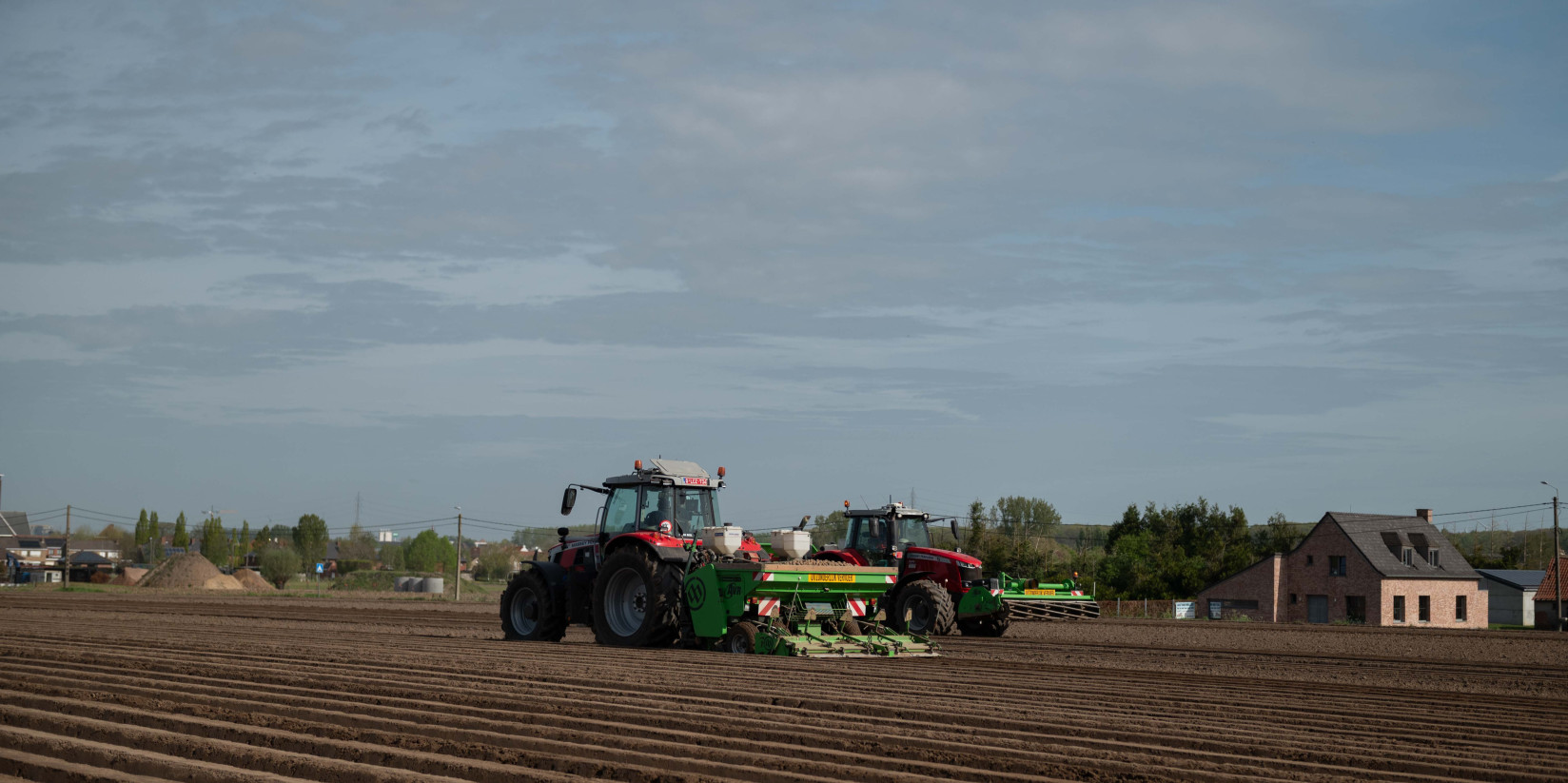
In spring, wet weather can delay planting because fields are too wet to access. When planting happens late, the growing season becomes shorter, which almost automatically reduces yield potential.

During the season, the type of rain matters. Short, heavy downpours can cause erosion and wash soil off the ridges, exposing tubers to light and increasing the risk of greening. Prolonged wet weather has a different effect: it leaves the soil saturated, reducing oxygen around the roots and making tubers more vulnerable to rot and disease.

Rain can also create serious difficulties at harvest. Wet fields are harder to enter, which can delay lifting or, in extreme cases, make it impossible. Harvesting in wet conditions can also damage soil structure, affecting future crops.

What ideal growing conditions look like

In general, potatoes perform best in moderate conditions, with temperatures around 15–22°C. For tuber formation, slightly cooler conditions around 15–20°C are ideal. Foliage can tolerate somewhat higher temperatures, but excessive heat puts the crop under stress.

Water balance is just as important. Potatoes need regular moisture for steady growth, but they also need drier periods so the soil can dry out and stay well aerated. Both prolonged wetness and extreme drought can cause problems.

A good start to the season also matters. Planting is best done in dry, workable fields so soil structure and ridges are in good shape from the beginning. That creates a stronger foundation for crop development throughout the season.

Variety choice plays a major role as well. Some varieties are better able to cope with heat or drought, while others depend more heavily on stable conditions. In practice, truly ideal conditions are becoming less common, especially as weather extremes become more frequent.

A crop that depends on balance

Potato growth is never shaped by one factor alone. Disease pressure, temperature, rainfall, soil conditions, and variety characteristics all interact throughout the season. A crop may look promising, but if conditions turn unfavorable at a critical stage, the effect on yield and quality can be significant.

That is why understanding potato growth means looking beyond sunshine or rain alone. In the end, a successful crop depends on balance and on carefully managing the many factors that influence the field from planting through harvest.