
Back to home

What are seed potatoes and why do they matter?

Agro

Seed potato growing is really a world on its own. It’s handled by specialized seed potato farmers, and they hold the keys to a successful next crop. That’s because potatoes don’t start from tiny seeds like wheat or corn. They start from seed potatoes (tubers) that will grow into the next plant. If the planting material is strong and consistent, the crop has a better chance to start evenly and perform well all season.

Because the quality of seed potatoes has such a big impact on the final result, it is monitored very strictly. The goal is simple: keep variety characteristics consistent and make sure quality standards are met.

How does it work in practice?

First, seed potatoes are handled in “lots” (think: one batch). After harvest, every lot of seed potatoes is checked by an independent inspector. This is the quality gate that helps ensure the lot is what it claims to be and meets the required standards.

Next, those approved lots are divided into different classes. You don’t need to remember all the names, but the idea is straightforward: the higher the class, the lower the chance that the seed potato will develop issues over time. When the lot is approved, it receives a certificate (official documentation). Only with this certificate can the seed potatoes be traded as certified seed within that system.

After approval, the tubers are sorted by size. This is important because uniform size helps planting run smoothly and supports a more even start in the field. If the tubers are too large, they don’t always plant smoothly. That’s why the big ones (often 50–60 mm) are cut in two: it makes them easier to plant consistently and improves how they move through the planter.

Did you know?

Agristo has its own seed potato cutting machine. It’s a service we provide to farmers in years with a lot of big seed potato sizes, so planting can stay efficient even when size distributions shift.

From storage to delivery

Seed potatoes are stored at 4 degrees. Before they are delivered to farmers to put in the ground, they will be pre-sprouted. Pre-sprouting (often called chitting) simply means encouraging short, controlled sprouts before planting. In practice, seed lots are stored cool and then warmed a few weeks ahead of planting to activate growth. This helps seed potatoes establish more quickly and evenly once field conditions allow.

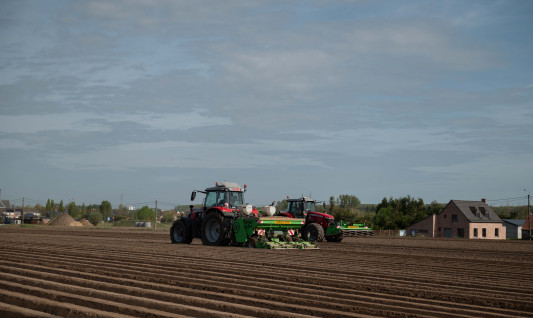
Seed potatoes are delivered to farmers between January and April. After this they are planted with special machines (but this is for our next blog).

What it means for the season ahead

Seed potatoes might be “just the start,” but they influence everything that follows. That’s why this ecosystem is so specialized, so strictly monitored, and so focused on getting the details right before the seed potatoes ever reach the field.

Want more agro insights like this? We’ll keep sharing updates as planting ramps up and the new crop develops